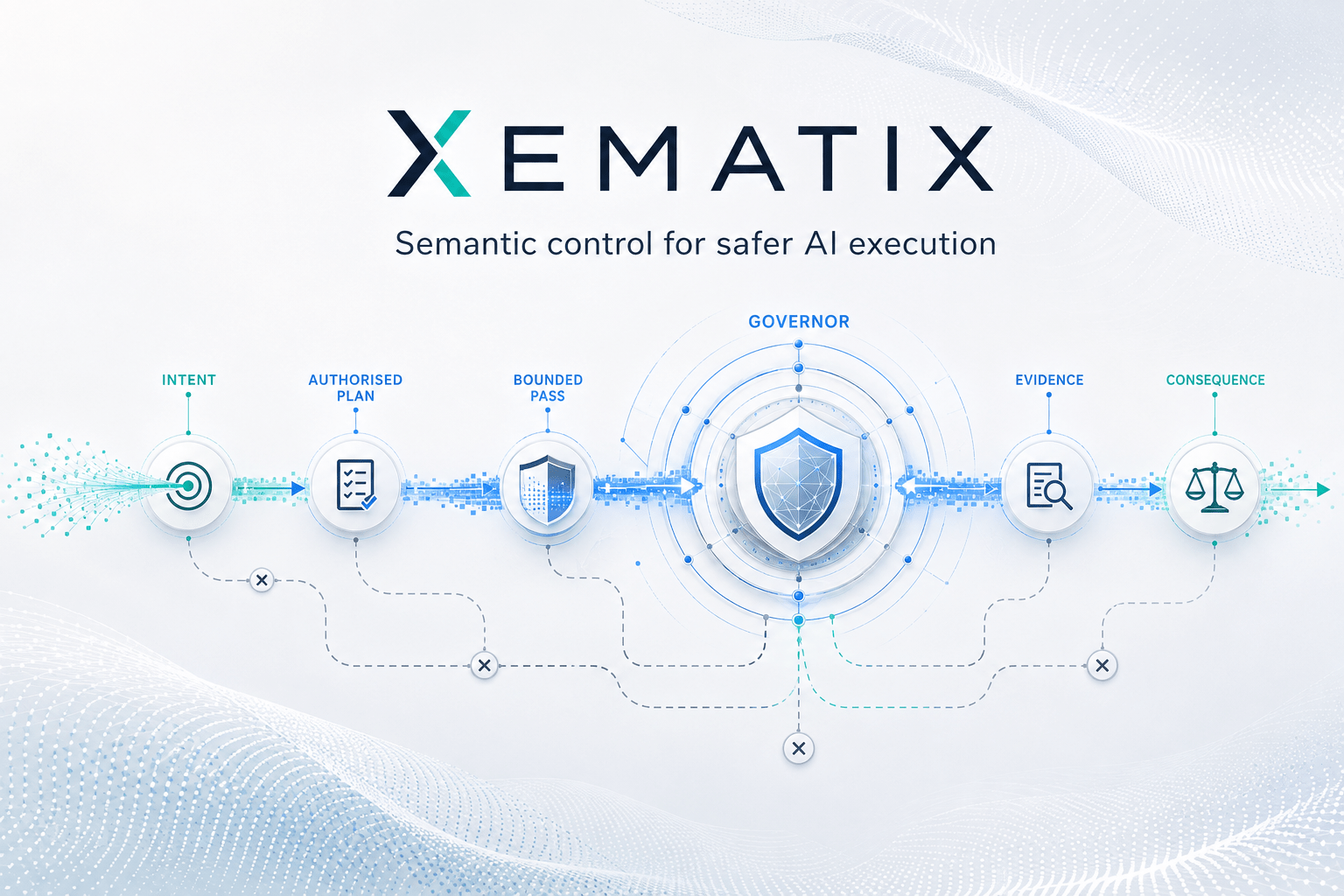
AI can compress analysis to minutes, but it can't absorb responsibility. In finance, that distinction matters more than the demo.
The real decision for a CFO isn't whether to use AI. It's whether the system makes human accountability clearer or harder to defend.
Opening
The promise is seductive: AI that can analyze variance reports in minutes, spot forecast anomalies instantly, and recommend budget adjustments faster than any human analyst. But every CFO knows the uncomfortable truth: when that recommendation goes wrong, no algorithm will sit in front of the board and explain why.
That tension between AI's speed and finance's non-negotiable requirement for human accountability isn't going away. It's becoming the central test for how finance leaders evaluate, procure, and govern new technology. The question isn't whether to use AI. It's how to harness its power without losing the ability to trace every consequential decision back to a specific person who can defend it.
TL;DR
AI can accelerate analysis, but accountability doesn't move with it. People still authorize, review, and act, which means responsibility has to stay visible at every step. In practice, the most important feature of any AI finance tool isn't just speed or pattern detection. It's the system's ability to preserve a defensible chain of responsibility from recommendation to decision. That shifts procurement criteria as well. Finance leaders shouldn't only ask how fast a tool works; they should ask how clearly it maps authority, constraints, and human judgment.
In finance, the value of AI isn't that it removes judgment. It's that it can sharpen judgment without obscuring who exercised it.
Definitions
In AI-driven finance, accountability means you can identify the specific person who authorized, reviewed, or acted on a recommendation, and you can show the authority and constraints under which that person operated. This isn't mainly about blame. It's about ensuring that decision-making remains legible when pressure arrives, whether that pressure comes from an audit, a board meeting, or a compliance review.
An audit trail, then, has to mean more than a record of system activity. It has to function as a governance layer. That means capturing not only what happened, but who had decision rights, what limits applied, and how the recommendation was interpreted before action was taken. These aren't abstract definitions or technical niceties. They're operational requirements that determine whether a finance organization can explain its own decisions when it matters most.
Core Argument
Trust in AI isn't built on model accuracy alone. In finance, trust becomes durable only when a recommendation survives triangulation, feedback, constraint, and governed action. A model may be impressive, but a finance system becomes dependable only when it creates a clear link between what the AI suggested, who evaluated it, what boundaries applied, and who ultimately acted.
This is where many tools fall short. They treat governance as a bolt-on logging feature attached to an otherwise automated workflow. That may satisfy a product checklist, but it doesn't satisfy the real standard finance operates under. CFOs don't need better black boxes. They need systems that make responsibility explicit before a recommendation turns into action.
The mechanism here is the Triangulation Method. A signal from AI becomes trustworthy only after it is tested across four conditions: it is compared against the role responsible for acting on it, checked against the constraints that govern that role, surfaced in a way that invites human review rather than silent acceptance, and recorded through a decision process that preserves who accepted, modified, or rejected it. The governing claim is simple: accountability survives only when AI output is connected to human authority before execution, not explained after the fact.
That has a practical implication. Finance leaders should evaluate AI architecture by asking whether it makes role boundaries visible, whether it shows the policy and risk constraints attached to each recommendation, and whether it captures the human decision in a way a non-technical reviewer can follow. If those elements aren't native to the workflow, then the system may accelerate analysis while weakening defensibility.
A recommendation isn't governed because it's logged. It's governed because responsibility, constraint, and action remain connected all the way through the decision.
This doesn't slow AI down. It makes speed usable. When a CFO can point to who made each decision, under what authority, and against which limits, AI stops feeling like anxious automation and starts functioning as controlled acceleration.
Examples
Consider monthly variance analysis, where AI can materially speed up insight generation but accountability remains firmly human. In a conventional setup, the system flags a 15 percent budget variance in marketing spend, recommends investigating three campaigns, and pushes an alert into the workflow. The analytical work is faster, but if the board later asks why marketing overspent, the organization is left reconstructing who saw the recommendation, who interpreted it, and who had the authority to act.
A governed design works differently. The same variance flag appears, but now the system also identifies the responsible role and the limits attached to that role. Sarah Chen, the Marketing Finance Manager, may have authority for variances under $50K, while anything above that threshold requires CFO approval. The recommendation doesn't arrive as a naked signal. It arrives with the operating boundaries attached: Sarah can approve investigation budgets up to $5K and must escalate findings within 48 hours.
That changes what the audit trail means. When Sarah acts, the record can show that she approved a $3K investigation budget for Campaign A based on a specific recommendation and rejected the suggestion to pause Campaign B pending manual review of the attribution model. Now the system isn't merely documenting machine output. It's preserving human judgment in context. Her manager can see what she accepted, what she challenged, and why.
Months later, if the board asks about marketing efficiency, the CFO has more than performance data. The organization has a defensible account of who made each decision, under what authority, and how AI guidance was interpreted before action was taken. The trail becomes useful not because it exists, but because it preserves governed responsibility rather than retrospective guesswork.
Close
This is the conceptual shift finance leaders are already making. The first question is no longer, “How fast can this AI process our data?” It's, “How clearly can this system prove who was responsible for each decision?”
That shift matters because finance doesn't merely need answers. It needs answers that survive scrutiny. A strong AI tool should let you trace every recommendation to a specific human with defined authority. It should show not only what the model suggested, but how a person interpreted that suggestion within policy, threshold, and role. And it should do so in a form that a non-technical auditor can understand without translation.
Vendors that can meet that standard are building for the real future of finance, where AI strengthens human judgment instead of obscuring human responsibility. Those that can't are still selling automation as if responsibility can be outsourced along with analysis. It can't. In finance, a system becomes credible only when the people, constraints, and decisions remain visible from start to finish.