The pressure usually shows up as a simple customer question, then turns into a much harder operational test. What matters now isn't just whether your AI system can produce a useful answer, but whether that answer can survive external review without reconstruction, guesswork, or informal explanation.
Opening
A customer's legal team asks a simple question: “Can you prove your AI system made this decision for the right reasons?” You hand over your internal documentation: design specs, test results, and deployment notes. Three weeks later, they respond: “This doesn't meet audit standards. We need lifecycle logs, traceable intent definitions, and evidence bundles formatted for third-party review.”
The EU AI Act and reported third-party audit requirements have converged on a single commercial reality: internal documentation isn't enough. What worked for internal teams, including scattered records, informal decision trails, and retrospective explanations, fails as soon as an external auditor has to validate the output.
The commercial shift is simple: customers aren't only buying the decision anymore. They're buying the ability to defend that decision under scrutiny.
TL;DR
Regulatory pressure is now shaping purchasing behavior. As audit expectations harden, audit-ready AI outputs become a practical requirement for enterprise sales, especially where decisions carry legal, financial, or clinical consequences. That changes the standard of proof. Internal documentation may explain how a system was built, but it usually doesn't provide the structure, traceability, or review format an external auditor needs.

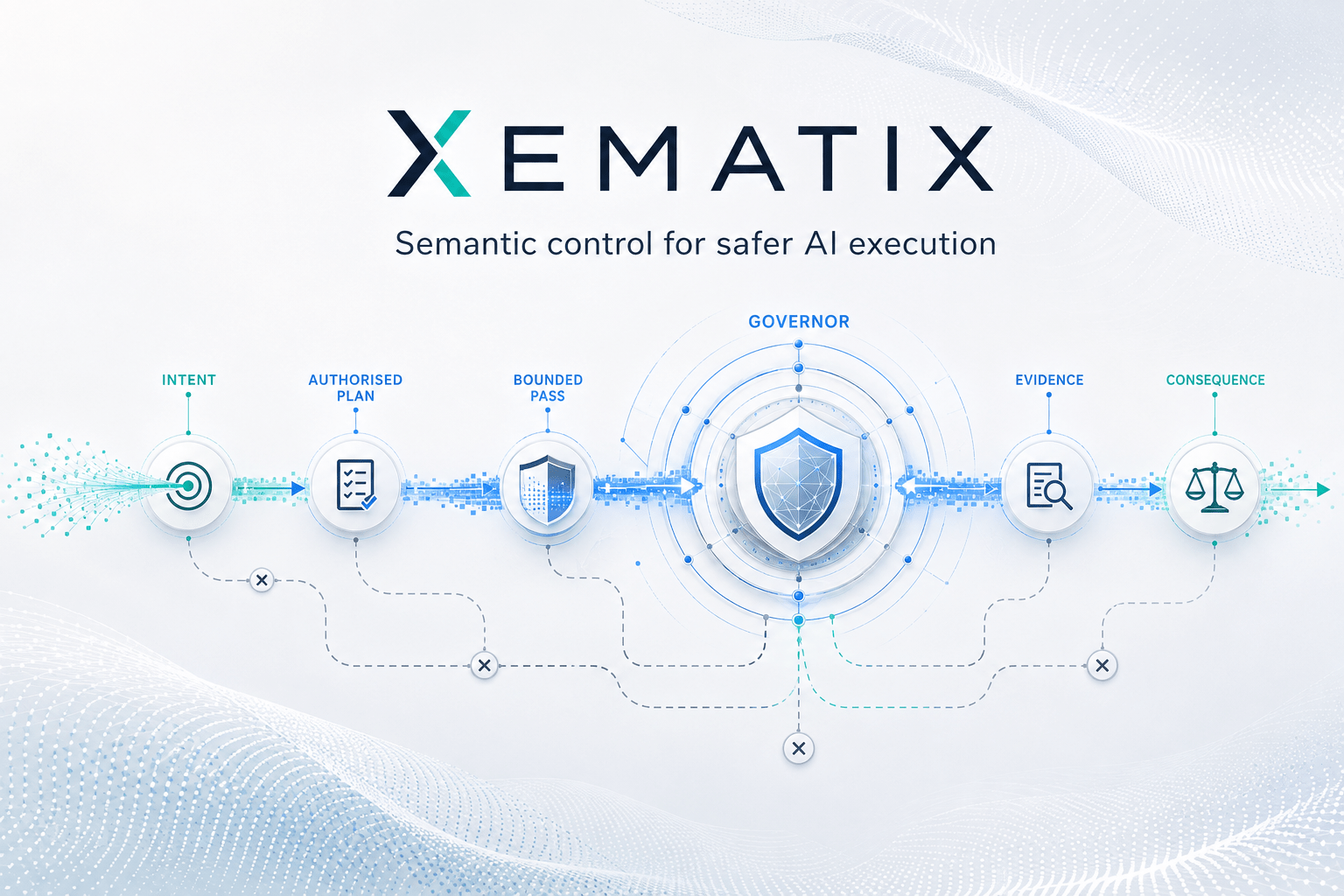
In practice, that means CAM outputs have to change form as well as function. It's no longer enough to generate an answer with a short rationale attached. The new standard is an evidence bundle: the output itself, the traceable logic and lifecycle record behind it, and the governance metadata that shows the process operated within defined controls.
Core Argument
This is a packaging shift, but it's also an operating model shift. The governing claim is straightforward: audit-ready AI outputs become commercially necessary when customers face external accountability for the decisions your system informs.
The mechanism is liability moving upstream. When an enterprise customer uses your output in a high-stakes process, they inherit the burden of proving that the output was produced under controlled conditions, for a defined purpose, with traceable decision logic. If they can't do that, risk doesn't stay inside their organization. It immediately becomes a vendor evaluation issue. That is why auditability is moving from a compliance concern to a product requirement.
A pharmaceutical company using CAM outputs in drug development doesn't just need a recommendation that appears sound. Its legal and regulatory teams need to show that the reasoning was traceable, the process was governed, and the result can be reviewed without relying on undocumented interpretation. The same pattern holds anywhere AI informs consequential decisions. If the output can't be independently examined, it becomes hard to use no matter how strong the underlying model may be.
This is where the Triangulation Method becomes practical rather than theoretical. A faint signal only becomes usable structure when it survives triangulation, feedback, constraint, and governed action. In this setting, the signal is the model output. Triangulation comes from linking that output to the inputs, rules, and decision path that produced it. Feedback appears in the ability of reviewers to test whether the result is consistent with the evidence. Constraint shows up in policy, validation, and control checkpoints. Governed action is the final handoff: an output packaged so another party can inspect it, trust it, and act on it without re-creating the process from scratch.

Evidence bundles are the concrete expression of that model. They combine the decision output, the reasoning trail that produced it, and the governance record showing that required controls were applied. The operational consequence is significant. Your system is no longer shipping answers alone; it's shipping answers with portable proof.
Audit readiness isn't created by better explanation after the fact. It's created by designing the output so its provenance, controls, and decision path are available at handoff.
Examples
That shift becomes clearer when you look at how the output changes in practice. A financial services firm using CAM outputs for loan approval recommendations may currently receive a risk assessment and a concise rationale. Under audit-ready conditions, that isn't sufficient. The usable artifact has to include timestamped records of the data inputs, a traceable account of how relevant factors affected the recommendation, and governance attestations showing that anti-discrimination controls were applied as intended. The decision still matters, but now the surrounding proof determines whether the decision can be used.
A healthcare organization evaluating treatment protocols faces the same operating logic in a different domain. A recommendation on its own may be clinically interesting, but it isn't audit-ready. The organization needs to see which patient factors drove the recommendation, how conflicting evidence was handled, and whether the decision process aligned with established clinical guidance. In other words, the recommendation has to arrive as a reviewable artifact, not a persuasive summary.
Across both examples, the testable implication is the same: if a third party can't follow the path from governed inputs to governed output, the output won't clear enterprise review. That's what changes the technical requirement. Current CAM exports are often optimized for clarity and actionability inside the business. Audit-ready bundles require additional instrumentation so the workflow can be validated externally, including explicit branch logic, input validation records, bias checks, and control checkpoints that another reviewer can examine without depending on internal tribal knowledge.
If you're translating this into operating practice, the workflow usually resolves into four steps: define the decision intent and control conditions up front; capture the input, validation, and reasoning trail as the output is produced; bind governance metadata to the output at handoff; and package the full record in a format an external reviewer can test without reconstruction.

Failure Modes
Once teams accept that auditability matters, the next risk is implementing it badly. The most common mistake is assuming that logging everything creates an auditable system. It doesn't. Raw volume isn't the same as usable proof. Large, unstructured logs may look comprehensive, but they force an auditor to reconstruct the workflow manually, which is exactly what audit-ready design is supposed to prevent.
A second failure mode is trying to retrofit provenance during a live deal cycle. When audit questions arise late in procurement, teams often scramble to rebuild the decision trail from whatever records happen to exist. That usually exposes the real gap: the system was built to generate outputs, not to produce handoff-ready evidence. Reconstructed proof tends to be brittle because it depends on interpretation, incomplete records, or undocumented assumptions.
The third failure mode is over-engineering. Some teams respond by building compliance infrastructure so heavy that the output becomes slow, expensive, or difficult to use. That misses the commercial point. Audit readiness only works if the evidence bundle is both defensible and operationally usable. The control logic has to be strong enough for review and efficient enough for routine deployment.
These failure modes all point to the same lesson. Audit readiness isn't achieved through more documentation in the abstract. It comes from controlled workflow design that determines, at the moment of output creation, what must be captured, how it will be linked, and how another party will verify it.
Close
The market is treating audit capability as part of the product now, not as a supplement around it. That's the practical effect of the EU AI Act and related third-party review expectations. When customers know they'll have to justify AI-supported decisions externally, they start buying systems that already produce portable evidence.
What changes in practice is clear. CAM outputs need to carry lifecycle logs, traceable intent, and governance proof in a form that can survive independent review. The companies that adapt won't just look more compliant. They'll be easier to buy, easier to approve internally, and easier to use in regulated environments. In that sense, audit-ready AI outputs are no longer just a control feature. They're becoming the commercial format for trust.