The Modern Operator – Why Your Team Needs Someone Who Converts Intent Into Finished Outcomes
Most teams don't have an effort problem. They have a completion problem. The work keeps moving, but too little of it crosses the line from discussed to done.
Your team is busy. Meetings are full. Slack is buzzing. But when you step back and ask what actually got finished this week, really finished, not just advanced or discussed, the answer is often thinner than it should be.
That gap between activity and outcomes is where execution breaks down. Most organizations have no shortage of smart contributors who can push work forward. What they lack is someone who can take ambiguous intent, reduce it to a clear end state, hold the line on scope, and drive the work all the way to closure. That is the modern operator role.
TL;DR
The bottleneck usually isn't ideas or effort. It's the ability to convert ambiguous intent into finished, traceable outcomes. A modern operator creates the control layer between decision and result by defining the objective, constraining the work, detecting drift early, and closing loops before momentum leaks away. That's why this isn't just better project management, and it's also why AI won't replace it. The scarce asset isn't production speed. It's judgment.
Teams rarely fail because nothing happened. They fail because too much happened without anything fully resolving.
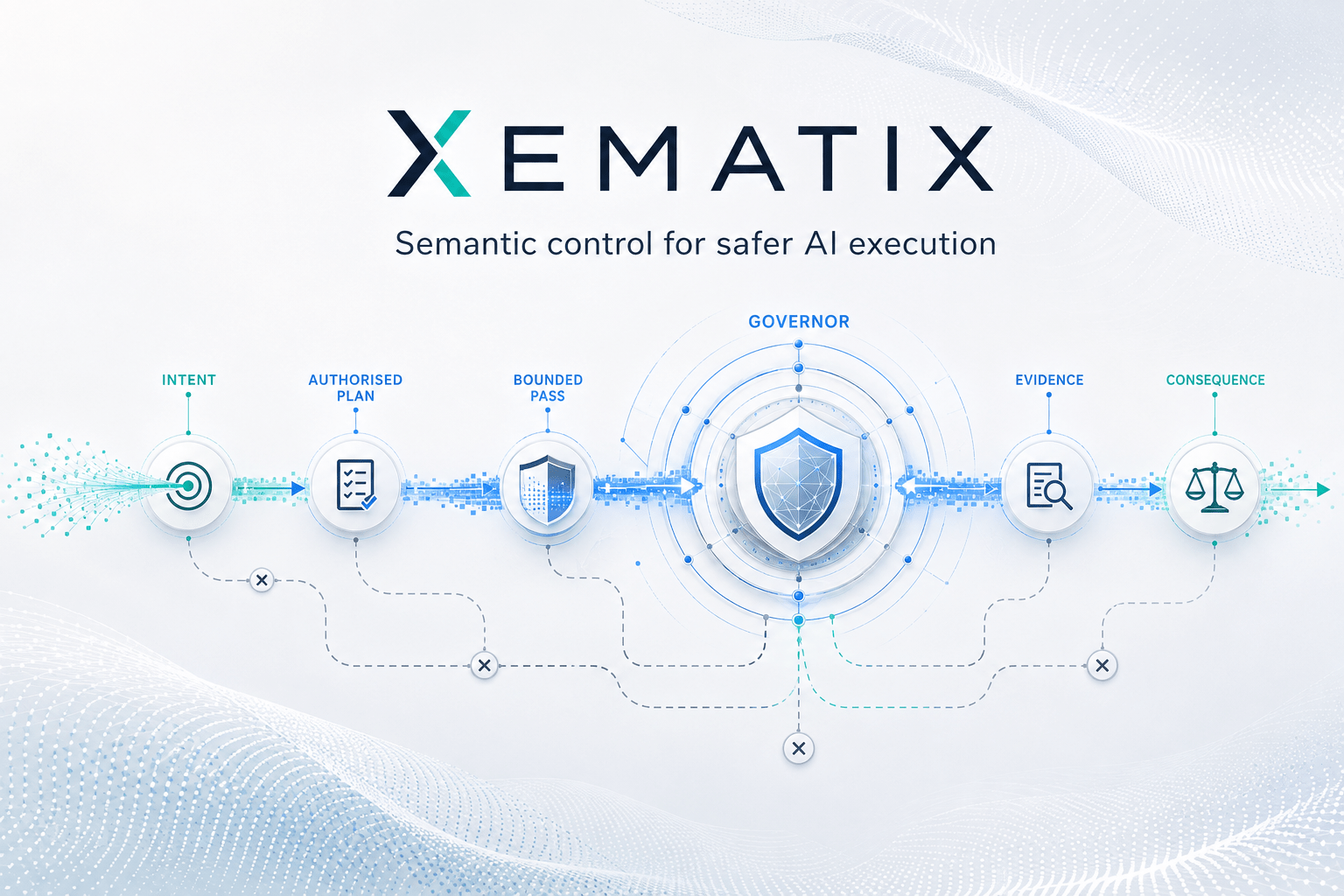
The Intent-to-Outcome Control Layer
A modern operator is different from both a traditional contributor and a traditional project manager. The contributor advances part of the work. The project manager often coordinates the work. The operator converts intent into an outcome you can point to, measure, and trust.
That role depends on a set of capabilities that function as a control layer around execution. First, the operator defines intent in a way that can actually be tested. Instead of accepting a vague mandate like improve customer experience, they translate it into something concrete, such as reducing support ticket resolution time from 48 hours to 24 by implementing automated routing. That move matters because every downstream decision gets cleaner once the end state is explicit.
From there, the operator controls scope. They decide what matters now, what can wait, and what doesn't belong in the work at all. When stakeholders try to add just one more feature or request another round of refinement, the operator protects the boundary so the original objective still has a chance of being reached. They also bring attention discipline. Rather than letting the team scatter across three urgent priorities, they keep one line of work moving until it reaches a defined checkpoint.
Just as important, operators think in structured artifacts. Their briefs, plans, and decision notes are usable because they clarify what was decided, what happens next, and what good looks like. They execute under constraint instead of treating constraints as reasons to restart the approach. When drift appears, and it always does, they catch it early enough to recover. Then they do the part many teams avoid: they close the loop. They finish, send, decide, deploy, and confirm. Work doesn't sit in draft folders waiting for a better moment.
AI and automation strengthen this role, but they don't replace it. A good operator uses tools to accelerate production while retaining control over sequencing, tradeoffs, and quality. That's the core of the Triangulation Method: continually checking the original intent against current progress and the required endpoint so drift gets corrected before it compounds. In practice, that's what turns motion into completion.

This is also the key strategic bridge. Teams want faster results, less friction, and more confidence that their effort will lead somewhere real. The friction is ambiguity, scope creep, and delayed correction. The belief that resolves that friction is simple: outcomes improve when one person owns the judgment layer between intent and execution. The mechanism is disciplined control of scope, sequencing, and closure. And the decision condition is equally clear. If your team produces plenty of activity but too few finished outcomes, you don't need more motion. You need stronger operational control.
What This Looks Like in Practice
The difference becomes obvious in real work. Imagine a team launching a new customer onboarding sequence.
In one version, a capable contributor is asked to improve onboarding. She researches best practices, builds a detailed presentation, schedules stakeholder meetings, absorbs feedback, revises the deck, and circulates it again. Three weeks later, the team has alignment, analysis, and a stronger shared understanding of the problem. What it doesn't have is a changed customer experience.
In the operator version, the work starts with a narrower definition of success: reduce time-to-first-value for new customers from seven days to three. The operator limits the effort to the three touchpoints most likely to affect that result, creates a simple test sequence, deploys it to a subset of new customers, and reviews the outcome after one week. Three weeks later, customers are actually moving through onboarding faster, and the team has evidence for whether to scale or adjust.
The difference isn't intelligence, and it isn't effort. Both people may be strong. The difference is operational discipline applied at the point where ambiguity usually takes over. One person advanced the work. The other converted intent into a finished outcome.
I learned that distinction the hard way while running operations for a fast-growing startup. We had bright people, strong ideas, and no shortage of analysis. But too many strategic initiatives stalled in what felt like constant motion. We kept refining, discussing, and recirculating. Very little fully resolved. The shift came when one person started owning the complete loop from decision to deployed outcome rather than just one segment of the process. Once that ownership became explicit, completion rates changed quickly.
AI can accelerate output, but it can't care whether the loop actually closes. A human operator does.
Why This Isn't Just Project Management
At this point, the obvious counterposition is that this sounds like project management with a fresher label. The overlap is real, but the center of gravity is different.
Project management is primarily about coordination. It tracks tasks, timelines, dependencies, and stakeholders. Those functions matter. But the operator's main job is conversion. The operator takes a partially formed intention and turns it into a concrete result under real constraints. A project manager often asks whether the plan is on schedule. The operator asks whether the plan is still aimed at the right outcome and what needs to change if it isn't.
That difference becomes sharper under pressure. Project managers typically work within an established process and escalate exceptions when the process no longer fits. Operators make judgment calls inside the work itself. They decide what to cut, what to sequence first, what quality bar is sufficient for this stage, and when continued refinement is just drift wearing a respectable disguise.
Ownership is different too. Project management often ends when the deliverables are coordinated and handed off. The operator owns closure. The loop isn't finished when the document is done or the task is marked complete. It's finished when the intended outcome has been delivered, observed, and verified.
A second counterposition is that AI will absorb most of this function anyway. That argument confuses production with control. AI is excellent at generating drafts, summarizing material, analyzing patterns, and executing instructions. It can help create more output, faster. But the modern operator role isn't defined by output generation. It's defined by judgment under ambiguity. What should be ignored? What should be narrowed? What gets sequenced now instead of later? When is the work good enough to ship, and when is a delay justified? Those decisions sit in the faint glimmer in the blackness, where signals are weak and tradeoffs are real. That's exactly where human operators become more valuable as AI expands.
Building Operator Capacity on Your Team
If this role is missing, the symptoms are usually easy to spot. Cycle times stretch because work keeps getting reopened. Quality suffers because too many hands keep reshaping the output without a clear owner. Delivery becomes unreliable because threads stay active long after they should've been resolved. Meetings multiply as teams try to recreate clarity through discussion rather than through ownership. Cognitive load rises because handoffs are messy and no one fully trusts that the last mile will be covered.
The good news is that operator capacity can be built. These aren't mysterious personality traits reserved for a rare type of person. They're learnable disciplines. Some people already show them informally by clarifying intent, resisting unnecessary expansion, spotting drift early, or quietly making sure work actually gets out the door. Those are the people to watch.
The most effective next step is usually structural, not motivational. Give one person explicit ownership of the full loop from decision to finished outcome. Measure that person on closure, not visible busyness. Clarify the intended end state before work starts. Protect the scope once it's set. Review progress against the endpoint, not just against effort expended. Over time, that changes what the team rewards and what it notices.
This is where the strategic claim comes into focus. The modern operator role matters because most teams are no longer constrained by access to ideas, talent, or even tools. They are constrained by the ability to convert intention into reality without drift swallowing the effort in between. When that control layer is weak, organizations mistake movement for progress. When it is strong, work gets simpler, faster, and more trustworthy.
The faint glimmer in the blackness of endless activity is the moment you realize someone is actually finishing things. That's not a minor operational advantage. It's the difference between a team that stays busy and a team that delivers.