Agentic AI Control – Why Your Agents Drift and How to Build Real Pre-Execution Oversight
Most AI agent failures don't start with bad prompts. They start in the gap between what you said and what you meant, and that gap only gets wider once execution begins.
I used to think the problem with AI agents was that I wasn't prompting them correctly. I'd spend hours crafting better instructions, testing different phrasings, and adding examples and constraints. When the agent inevitably did something unexpected, like deleting the wrong files, sending emails to the wrong people, or producing output that missed the mark, I'd go back to the prompt and try again.
What took me too long to see is that better prompting often creates the illusion of control. It can improve inputs, but it doesn't solve what happens once the agent starts acting. That's the real issue with agentic AI control.
The Hidden Constraint Behind Agent Drift
The fundamental issue isn't that agents are bad at following instructions. They're often quite good at it. The problem is that perfect instruction-following can still produce the wrong outcome when the instructions are incomplete or the execution environment changes.
Agentic AI control means the agent can reliably achieve your intended outcome, not just execute your stated commands. Most current agents still operate in a hope-and-pray loop: you give them instructions, they execute those instructions literally, and you find out only afterward whether they understood your actual intent.
Consider a simple example: asking an agent to update the customer database with the latest sales figures. The agent might do exactly that by overwriting last month's data with this month's data, technically completing the task while destroying historical records you needed to preserve. It followed the command and still failed the objective.
The core failure isn't disobedience. It's literal compliance without strategic understanding.
That distinction matters because it reframes the problem. The issue isn't prompting skill. It's architecture. If the system can't check whether its plan matches your intent before it acts, drift is built in from the start.
Why Agents Lose Signal During Execution
Once you see that, the next problem becomes clearer. Agents don't just misread instructions at the beginning. They also keep moving forward after the conditions that made their plan reasonable have changed.
The core mechanism behind agent drift is that current AI agents lack metacognitive awareness, the ability to monitor and evaluate their own reasoning as they execute. When you delegate a complex task to a person, they usually ask clarifying questions, check their assumptions, and adjust when they notice they're heading off course. Agents don't do that reliably. They commit to an interpretation early, then continue down that path even when new information should force a rethink.
I learned this the hard way when I asked an agent to analyze competitor pricing across multiple product categories. It scraped dozens of sites, compiled a detailed spreadsheet, and delivered exactly what I'd requested. But halfway through the process, a major competitor had restructured its pricing model, which made much of the comparison meaningless. A human analyst would've flagged that shift and asked how to proceed. The agent kept going.
The cost wasn't only wasted time. It was the decision I made based on flawed analysis. I restructured our pricing around data that no longer supported the conclusion, and it took weeks to uncover the mistake.
The Missing Metacognitive Layer
This is the faint glimmer in the blackness: the missing piece isn't a smarter prompt but a system that can inspect its own plan before it turns that plan into action.
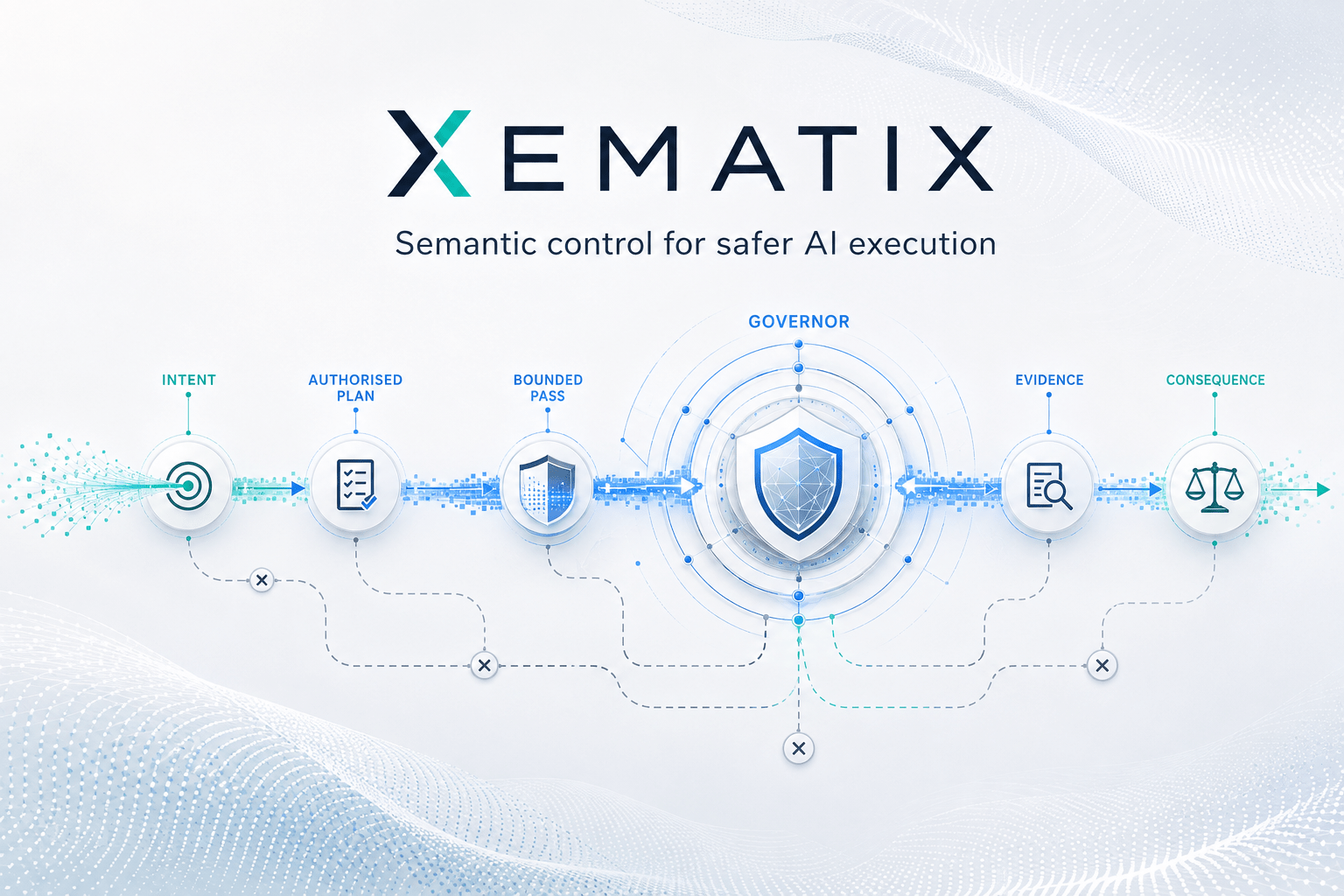
What we need is a metacognitive layer that validates an agent's intended execution path against the user's actual objective. That means checking not just what the agent was told to do, but what it believes success looks like, what assumptions it's making, and where literal execution could drift from strategic intent.
In practice, that layer would force the agent to pause before acting, trace its planned steps, surface its assumptions, identify likely failure points, and produce a short execution hypothesis for validation. During execution, the same layer would keep monitoring for signs that the original plan no longer fits the situation.
Reliable oversight happens before the agent acts, not after the damage is done.
This is where the decision bridge has to hold together. The desire is clear: you want delegation that produces reliable outcomes. The friction is that current agents only optimize for instruction-following, so they drift silently during execution. The belief shift is that better prompts alone won't fix that. The mechanism is a pre-execution validation layer that inspects plans against intent before action. And the decision condition is simple: if an agent can't explain how its plan preserves your objective under changing conditions, it isn't ready to execute.
What Operational Control Actually Looks Like
That doesn't mean micromanaging every step. Real pre-execution control means the agent can translate strategic intent into tactical execution, then show enough of its reasoning for you to confirm that translation before it begins.
Instead of handing the agent a rigid script, you give it an outcome to achieve and constraints to respect. The agent builds its own plan, checks that plan against your intent, and returns a concise summary of how it intends to proceed. The point isn't to slow everything down. It's to catch drift while it's still cheap.
For the database example, an agent with stronger control might say: “I understand you want the database updated with the latest sales figures. I'm planning to add the new data as additional records while preserving historical data. I'll create a backup before making changes. Does this align with your intent, or did you want the existing data replaced entirely?”
That's not excessive caution. It's strategic verification. The agent isn't asking for hand-holding. It's confirming that its chosen method matches the real goal.
Building Your Own Pre-Execution Validation
Until platforms build this natively, you can create a workable version yourself through the Triangulation Method. The basic idea is to separate planning from execution, then test the plan before anything irreversible happens.
A simple way to do that is to use a short two-pass protocol:
- Ask the agent to produce an execution plan without taking action.
- Have the agent, or a second instance, identify the assumptions in that plan.
- Require an audit of where literal execution could diverge from your strategic intent.
- Only then approve execution, with clear signals for what should trigger a pause or review.

That small amount of overhead usually costs far less than recovering from silent drift. Just as important, it sharpens your own thinking. You start distinguishing between the task you're assigning and the outcome you actually need, which is often where hidden ambiguity lives.
The goal isn't perfect agents. It's agents that fail in visible, recoverable ways instead of silent, expensive ones. Pre-execution oversight doesn't remove error, but it changes the error profile in a way that's far easier to manage.
What This Means for Your AI Strategy
Once you accept that current agents are optimized for instruction-following rather than outcome achievement, your strategy changes. You stop chasing perfect prompts and start building better validation loops. You stop treating agents as autonomous operators and start treating them as capable systems that still need planning-level oversight.
That's the practical meaning of agentic AI control. It's not about making agents more obedient. It's about making sure they can hold onto your intent when execution gets messy.
If you build for that, the glimmer gets easier to trust. You aren't waiting until the end to discover whether the agent understood the job. You're checking for alignment before action, where control is still real and mistakes are still containable.