Agentic AI Human Judgment – Why 2026 Changes Everything About Digital Work
AI is no longer a tool you pick up and put down; it’s becoming the medium your work flows through. The question isn’t whether to use agentic AI, but how to keep human judgment in charge. By 2026, that design choice will define the quality of digital work.
Something fundamental shifted in the last six months. AI isn’t just getting better at discrete tasks, it’s becoming a cognitive extension of how we think and operate. By 2026, the question won’t be whether to use agentic AI, but whether you’ve built the right guardrails to keep human judgment at the center.
Agentic AI represents AI systems that can act autonomously on complex tasks while maintaining alignment with human intent. Unlike simple automation, these systems compress and decompress complex information, functioning as soft logic that amplifies digital labor while preserving the nuanced decision-making that separates insight from execution.
TL;DR
LLMs are shifting from automation to cognitive extension that can amplify human judgment, but over-reliance risks subtle misalignment and atrophied discrimination; the way forward is human-in-the-loop systems with explicit intent tracking, transparent reasoning, and review points that detect and correct drift.
The Promise Hiding in Plain Sight
Last month, a startup founder told me her team cut proposal time from 40 hours to 6 using an LLM, but the breakthrough wasn’t speed. “The AI helped us see patterns in our thinking we’d never noticed, ” she said. “It wasn’t doing the work for us. It was showing us how to think about the work differently.”
This captures what’s actually happening with agentic AI in 2026. These systems excel at what I call the Intent Trace Method: they follow the thread of your thinking, compress complex ideas into actionable steps, then decompress them back into coherent execution. The faint pitch in the blackness isn’t the AI’s capability; it’s your own strategic clarity amplified.

Agentic AI isn’t a faster typist; it’s a cognitive extender that shortens the path from intent to impact.
Consider a product manager who feeds an LLM messy user feedback, competitive notes, and technical constraints. The system doesn’t just summarize, it spots cross-observation patterns, flags contradictions, and proposes experiments to resolve ambiguity. The human still makes the calls, but the cognitive load of connecting disparate signals drops dramatically. This isn’t traditional automation. It’s cognitive assistance that preserves agency while collapsing the time between insight and action.
Where Human Judgment Gets Compromised
The same compression and decompression that makes LLMs powerful also introduces “semantic drift”, the quiet loss of nuance as ideas pass through interpretation layers. The danger isn’t obvious failure; it’s subtly misaligned decisions that still look competent.
When AI delivers “good enough” ideas on demand, our intellectual discrimination can atrophy. Teams adopting AI writing tools too quickly often ship work that’s more polished yet less distinctive. The AI isn’t wrong; it’s optimizing for a different definition of “good” than the humans intended. And when AI mediates our communication and decision-making, every interaction becomes a compression-decompression cycle that risks small misreads accumulating into strategic drift.
The failure mode isn’t obvious error; it’s subtle misalignment you stop noticing.
Here’s the decision bridge in one move: you want the speed and synthesis of agentic AI (desire), but you face drift, over-trust, and loss of will (friction). Believe that AI should extend, not replace, judgment (belief). Use an intent-tracing mechanism with transparent reasoning and checkpoints (mechanism). Proceed only when goals are explicit, reasoning is inspectable, and high-impact calls get human sign-off (decision conditions).
Building Systems That Preserve Agency
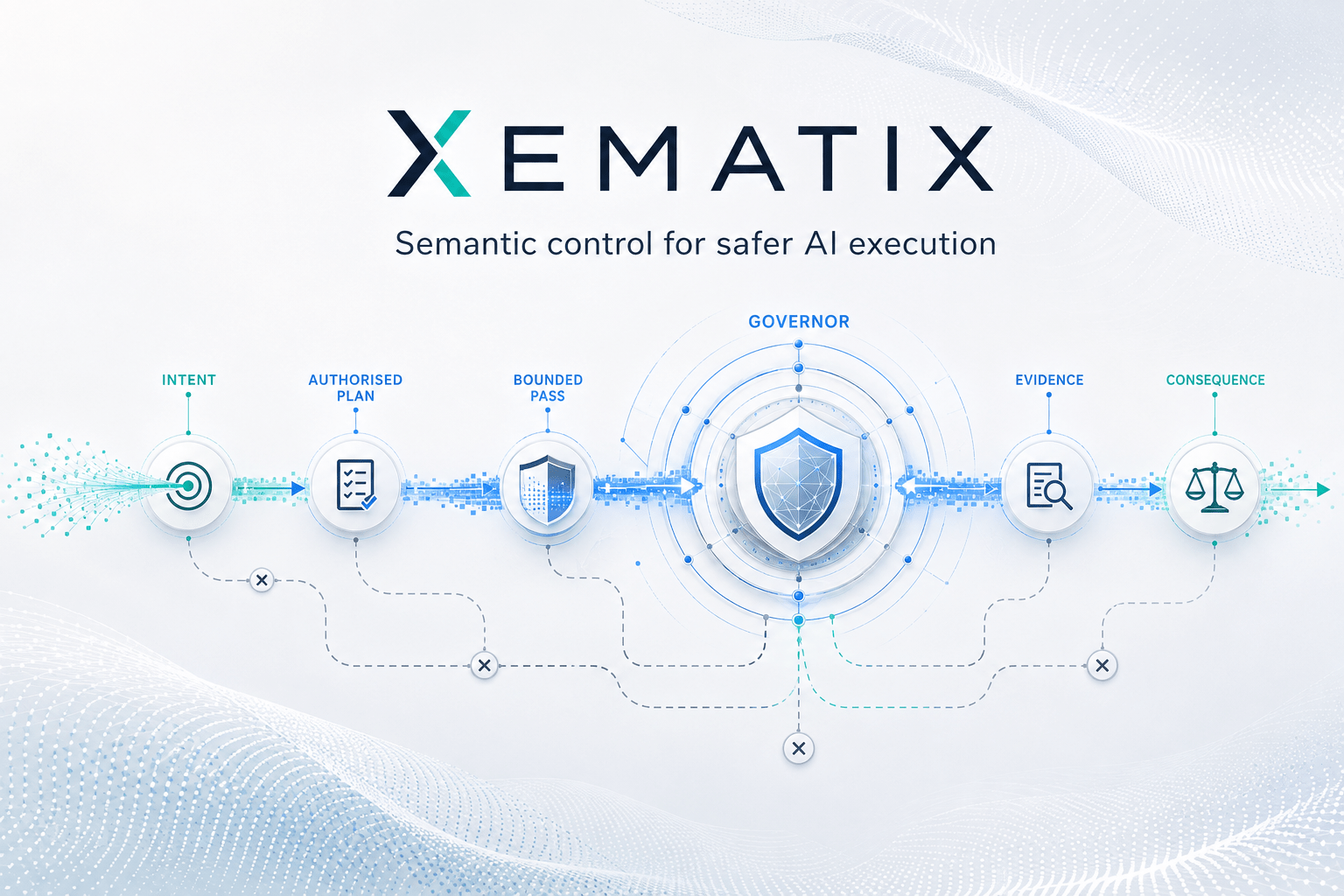
The solution isn’t to avoid agentic AI, it’s to design it with human judgment as the primary constraint. That starts with a pre-execution semantic layer that traces user intent to specific decisions and measures output drift against benchmarks you define.
In practice, begin with intent alignment. Before any task runs, the system should demonstrate it understands the real goal, not just the phrasing of a request. Clarifying questions and brief confirmation loops surface hidden assumptions and set the frame for what “good” means.
Next, establish mandatory review points for consequential steps. Human sign-off shouldn’t be a rubber stamp; require the system to present its reasoning, highlight uncertainties, and flag where outputs might conflict with stated objectives. This gives you visibility into how the model translated intent into action.
Finally, build drift detection. Track how outputs evolve versus human-defined criteria, and pause execution when a threshold is crossed. The pause isn’t a failure; it’s a control surface that keeps agency where it belongs.
A consulting firm I work with implemented this for client research. Their system synthesizes industry reports and competitive analyses, and it’s required to flag conclusions that contradict previous human assessments or fall outside defined confidence thresholds. The result: 70% faster research cycles with higher accuracy than purely human or purely AI approaches.
One Small Reversible Test
To explore agentic AI without giving up judgment, run a reversible trial and make learning the goal.
- Ask an AI to handle the first pass on one recurring analytical task (2–4 hours) and require plain-language reasoning.
- Have it list the top 3 assumptions behind its recommendations.
- Instruct it to flag any conclusion that contradicts prior work or falls below a confidence threshold you set.
Run this for two weeks, then assess: Did you surface insights you would’ve missed? Did nuance suffer? Most importantly, do you still feel able to do this work well without the AI? The aim isn’t to prove AI is good or bad, it’s to understand how it changes your thinking and whether that change aligns with what you actually value. In 2026, that alignment is the difference between leverage and drift.