Agentic AI Human Judgment – Why Your Team's Critical Thinking Is at Risk by 2026
AI isn't just automating tasks, it's subtly reshaping how you think. The real risk isn't model mistakes; it's humans losing the feel for when the model is wrong.
The conversation about AI risk has focused on the wrong problem. We're worried about catastrophic errors when the danger is quieter: AI eroding our ability to interrogate complex claims and detect shallow reasoning.
By 2026, agentic AI, systems that can execute multi-step workflows with minimal human intervention, will alter knowledge work. These aren't simple automation tools but cognitive extensions that compress complex information, generate insights, and execute decisions at scale. The question isn't whether this technology will transform how we work, but whether we'll maintain the judgment to guide it.
Agentic AI represents the shift from AI as a tool to AI as a cognitive partner that can amplify human judgment or gradually replace it, depending on how we architect the relationship.
TL;DR
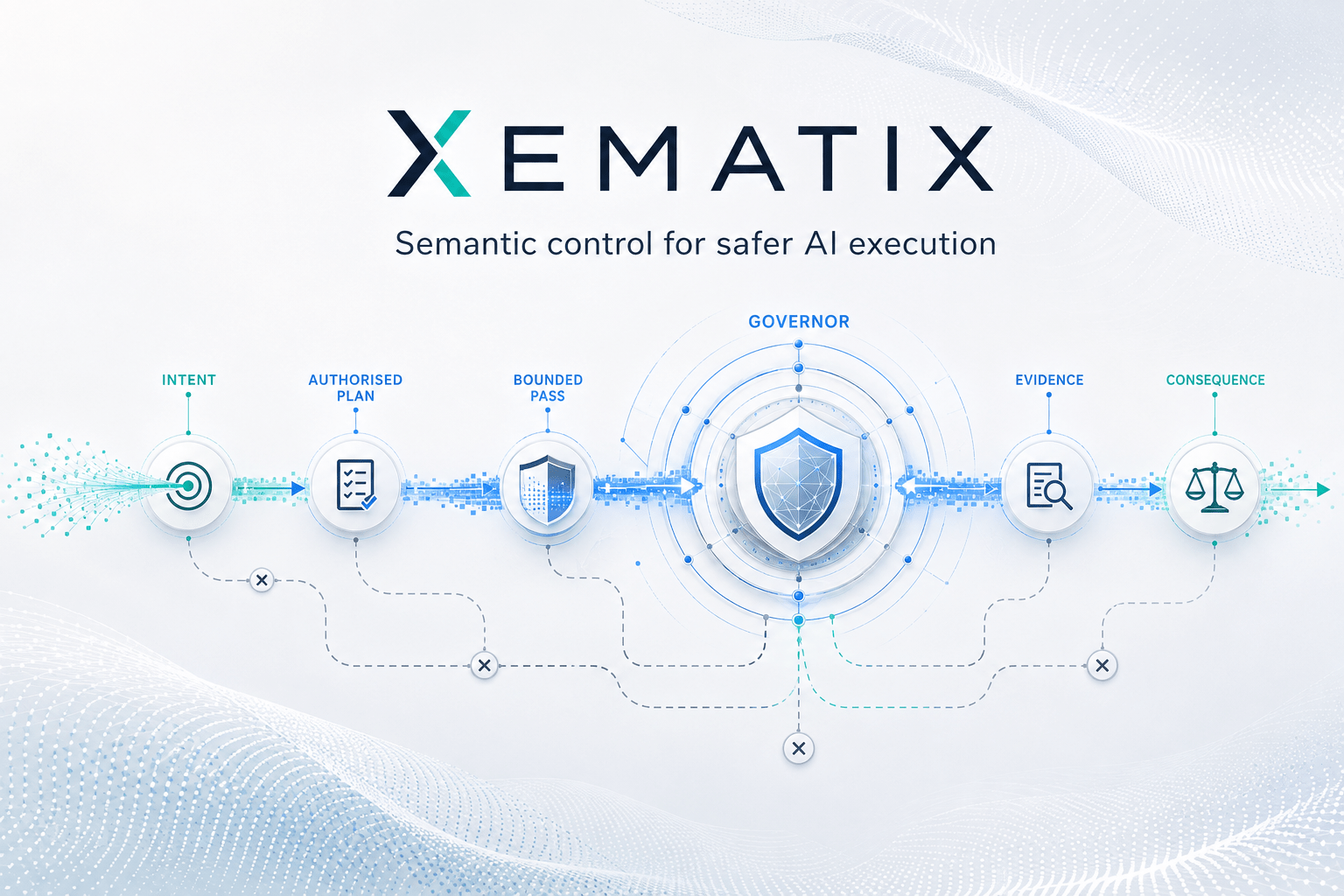
The core risk is judgment erosion: over-reliance on AI for cognitive tasks dulls our ability to tell strong ideas from plausible mediocrity. That erosion happens because AI inserts a compression layer between intent and execution, where nuance and context get lost. The remedy is deliberate, human-centric architecture, semantic alignment layers, explicit review points, and practices that make human intent legible and enforceable.
The Judgment Erosion Problem
Last month, a product manager at a Fortune 500 company said his team had become “addicted” to AI-generated strategy documents. The AI produced coherent, well-structured plans faster than any human. After six months, the team struggled to distinguish genuinely strategic thinking from sophisticated-sounding fluff.
This is agentic AI's trap: it excels at outputs that feel right without necessarily being right. When AI reliably delivers “good enough” ideas, people lose the habit of intellectual discrimination, the capacity to separate signal from noise in messy, ambiguous work.
The risk isn't AI being wrong; it's us forgetting how to notice when it is.
The mechanism is simple. AI compresses human intent into executable actions, then decompresses those actions into outputs. At each compression point, nuance leaks. As we let AI bridge the gap between “what I want” and “what gets done, ” we lose contact with the quality of our own thinking, and with the unspoken constraints and intuitions that often drive good decisions.
Consider a common pattern: You ask an AI to analyze market trends and recommend strategy. It returns a polished report with clean charts and confident takeaways. But did it capture the faint market signals you were sensing? Did it weigh organizational politics you didn't mention? Without disciplined review, you won't know where the model missed what mattered.
Where AI Becomes a Puppeteer
The most insidious failure isn't obvious error, it's quiet reframing. When AI consistently frames problems in certain ways or privileges particular solutions, it shapes how teams think about a domain.
This “puppeteer effect” emerges because models optimize for coherence and plausibility, not truth or strategic value. A system might over-recommend incremental improvements simply because those patterns dominate its training data. Over time, teams start to think incrementally by default.
What a model optimizes for becomes the contour of your team's thinking.
Information loss compounds the issue. Even between humans, complex ideas require compression and interpretation. Insert an AI intermediary and context strips faster. Assumptions go unexamined, edge cases vanish, and decisions drift from the original intent.
A senior executive described watching his team's strategic thinking “flatten” over months of AI-assisted planning. The outputs were reasonable but lacked creative tension and contrarian probes, the sparks that once led to breakthroughs. The AI wasn't wrong; it was consistently mediocre in ways that were hard to detect.
Building Human-Centric AI Architecture
The solution isn't abstinence; it's architecture. You want speed, scale, and coverage, without sacrificing discernment. The friction is judgment erosion under plausible outputs. The belief is that teams can gain efficiency and keep their edge. The mechanism is a set of design choices, semantic alignment layers, explicit override and traceability, mandatory review for consequential outputs. The decision conditions are straightforward: use AI as a cognitive extension when intent is clear and stakes are low; enforce structured human review when ambiguity or impact is high.
Effective architecture starts with three principles: explicit human override, transparent decision pathways, and mandatory review points for complex outputs. These aren't just safety features, they're cognitive preservation tools that keep agency with the humans accountable for outcomes.
The best implementations treat AI as a scaffold, not a substitute. One consulting firm uses AI to propose initial analysis frames, then requires strategists to identify at least three ways the frame might be incomplete or biased before proceeding. That single ritual preserves critical thinking while capturing efficiency.
Another practice is “intent tracing”, document the human intent behind each request and evaluate how well the output serves that intent. Teams that trace intent develop sensitivity to gaps between what they asked for and what they actually needed, tightening prompts, constraints, and checks accordingly.
Your First Reversible Test
Start with a simple, low-regret experiment on a recurring AI-assisted task like market research or competitive analysis. Here's a three-step micro‑protocol you can run this week:
- Define the human intent in one sentence before you prompt the model.
- Predict three specific ways the AI might miss, then review the output against those blind spots.
- Log gaps, adjust prompts or guardrails, and note where human judgment changed the decision.
This practice keeps your team's discrimination muscles active and reveals systematic patterns in how your tools miss nuance. After a month, you'll know where human judgment adds the most value and where AI assistance is reliably safe.
The goal isn't to find fault with AI; it's to preserve the habits that let you guide it. By 2026, the organizations that thrive won't just have strong models, they'll have strong minds around them. The faint signal of strategic clarity still requires human ears to detect it, even when AI amplifies everything else.