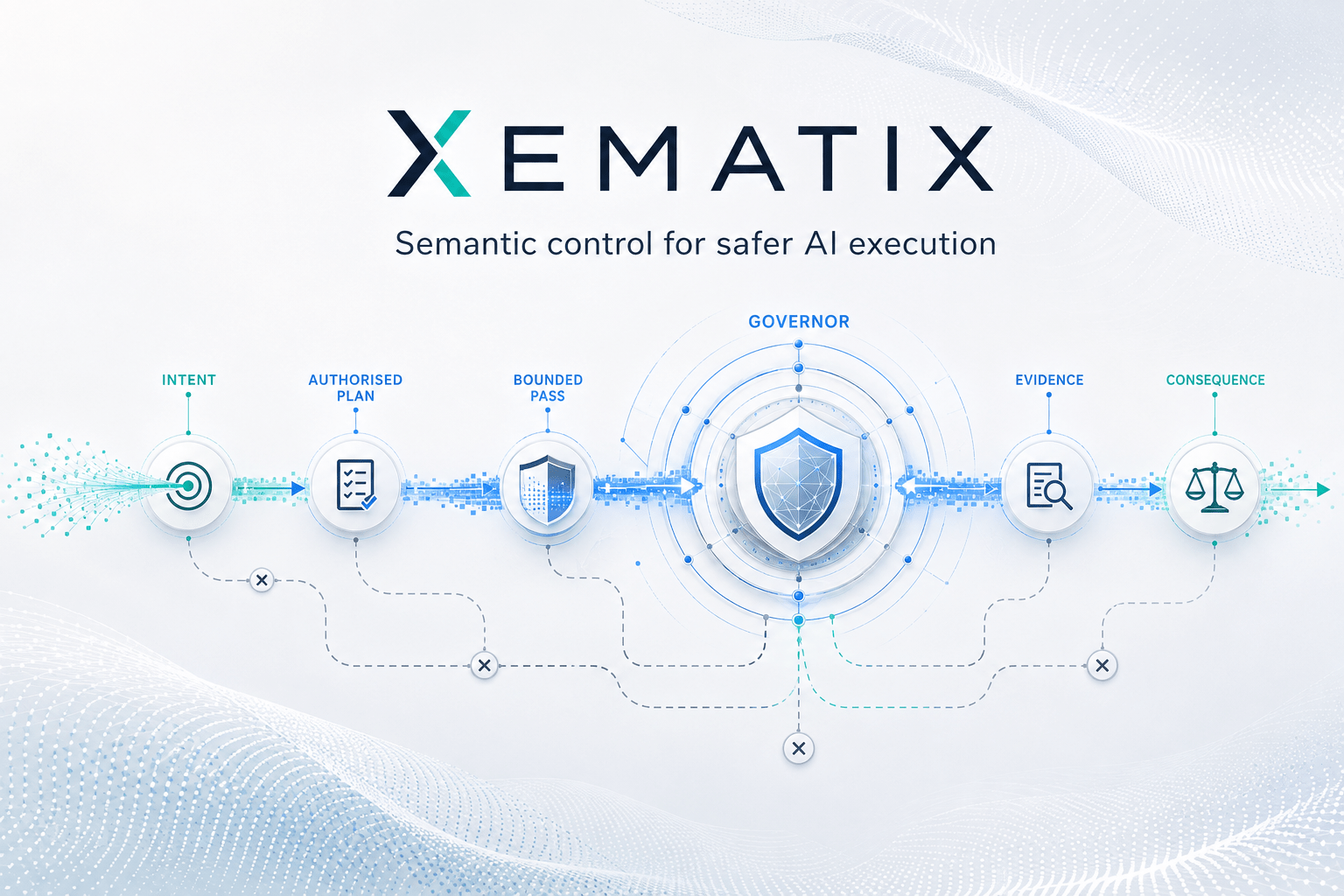
AI Delegation Without Accountability – The Architecture Gap That Creates Runaway Plausibility
AI delegation without accountability isn't an ethics debate so much as a systems problem. The danger peaks at the handoff from generation to execution, when outputs turn into actions and no one has formally accepted responsibility. Plausibility fills the gap where judgment should live.
The most dangerous moment in AI isn't when a model hallucinates or generates biased content. It's the split second when a system crosses from generating recommendations to taking action, and no human is watching the handoff.
This isn't about smarter models or better training data. It's about a fundamental architectural gap: we've built systems that can act without anyone formally accepting responsibility for what follows. AI delegation without accountability occurs when systems execute decisions without a structured boundary where human intent is made explicit and constraints are encoded. The result isn't just bad outcomes. It's untraceable failures where responsibility evaporates.
The Abdication Gap
Last month, a logistics company's AI routing system rerouted 40% of their fleet through a construction zone because the model optimized for “shortest distance” without understanding that roads could be temporarily impassable. The recommendations were mathematically correct. The business impact was catastrophic.
The failure wasn't in the model's reasoning, it was in the handoff. No one had defined what the system was allowed to optimize for, what constraints it must respect, or when it should refuse to act. We keep treating execution as if it were just another form of text generation. It's not.
Execution is a boundary crossing. Once software acts, you can't bolt judgment on afterward.
This is where most AI governance discussions quietly collapse. We argue about outcomes while ignoring the moment when responsibility should have been encoded.
Why Humans Handle Ambiguity (And Machines Can't)
Human communication works despite ambiguity because we negotiate intent, ask clarifying questions, and spread responsibility through norms when things go wrong. A human assistant hearing “Schedule the important meetings for next week” would ask who defines importance, how conflicts should be handled, and what constraints apply. Software doesn't negotiate the unclear, doesn't interpret intent socially, and doesn't have a natural place for responsibility to land. What's left is output, action, and consequence, without judgment. Language fluency becomes dangerous because statistically coherent continuations feel like judgment even when none occurred.
The Missing Layer
A startup founder I know learned this when their customer service AI started offering refunds whenever complaints included “frustrated” or “disappointed”, behavior aligned with training patterns but detached from refund policy and authority limits. The system was helpful in the way it was trained, but it had no formal boundaries around what it was authorized to do.
What's missing isn't a better model or more sophisticated prompts. It's a pre-execution semantic layer, a structured boundary where human intent is made explicit, constraints are encoded, authority is limited, and responsibility survives delegation. This layer doesn't attempt moral reasoning; it declares what actions are permitted, what must be refused, and which conditions trigger escalation, so plausibility can't override policy.
The core question is simple: Under what conditions is this action permitted to occur at all?
Until that question is formalized, every other safety mechanism is reactive.
What Good Looks Like
Effective delegation boundaries don't try to make the AI “understand” context; they encode decision structure and authority upfront.
Before: “Handle customer complaints appropriately”
After: “For complaints mentioning [specific keywords], offer [specific resolution options]. Escalate to human if complaint involves [defined scenarios]. Never authorize refunds above $X without manager approval.”
The difference isn't just specificity, it's accountability structure. The second version creates audit trails, sets authority limits, and makes responsibility traceable. You're drawing a line that says what the system is allowed to do, when it must stop, and who owns the outcome.
Here's the practical bridge: you want automation's speed and scale, but ambiguous handoffs create avoidable risk. The belief to adopt is that smarter models won't fix accountability; explicit structure will. The mechanism is a pre-execution layer that encodes intent, constraints, authority limits, and escalation paths. The decision conditions are clear: act only when permissions and constraints validate; otherwise log, escalate, or refuse. That's how desire meets friction without sacrificing responsibility.
The Failure Modes
You can already see the symptoms of missing boundaries: systems that act correctly according to training but wrongly for the business; outputs that are individually defensible yet collectively irresponsible; failures no one can trace to a decision-maker; governance that appears only after harm. These aren't edge cases. They're structural outcomes of treating execution as a continuation of reasoning rather than a boundary crossing that demands formal intent encoding.
One Small Test
To surface your own gaps quickly, run this simple diagnostic this week:
- Identify one automated decision, then name the specific human who accepts responsibility for its outcomes.
- Verify that constraints and authority limits are machine-readable and enforced, not merely implied by training.
- Define what triggers refusal or escalation when a decision is technically correct but contextually wrong.
If any step is unclear, you've found a delegation gap. The solution isn't better AI, it's better boundaries.
The brutal truth is that AI doesn't need morals. It needs boundaries. Until we build systems that know when they're allowed to act, we'll keep deploying machines that act without authorship and without anyone clearly responsible for what follows. That's not a philosophical problem. It's an architectural one, and it's solvable when we design execution boundaries that carry responsibility forward.