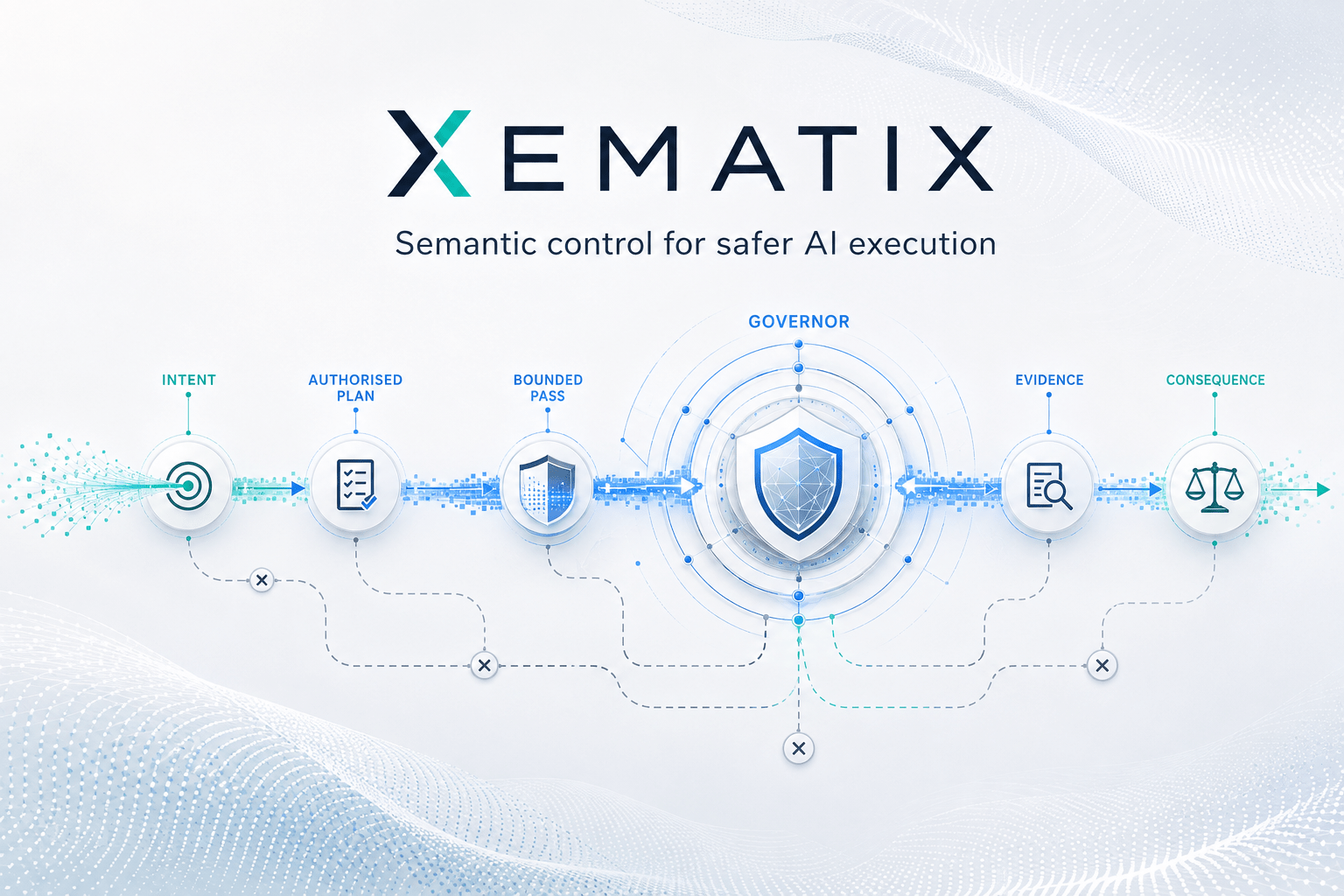
Why Cognitive Pipelines Fail Without Metacognitive Execution Architecture
You can feel velocity and still be off-course. If your pipeline is learning faster than your intent is declared, you're accelerating drift. This is the quiet failure most teams don't catch until it shows up in user outcomes.
I used to think the faint pitch in the blackness was just noise, the subtle signal that something wasn't quite right with our deployment pipeline, buried beneath layers of metrics and alerts. Our team had built what we proudly called a “cognitive pipeline, ” complete with AI-driven testing strategies and adaptive deployment logic. It learned from our patterns, predicted failure modes, and even auto-remediated common issues. Yet somehow, we kept shipping features that technically worked but missed the mark strategically. The pipeline was getting smarter, but we were getting less aligned.
Intelligence without intent creates speed without direction.
TL;DR
Cognitive pipelines add learning and adaptation to CI/CD, but they infer intent rather than declaring it. Metacognitive execution treats pipelines as thinking systems with explicit layers for intent, reasoning, execution, and oversight. If you need delivery speed without sacrificing strategic alignment or governance, you need both intelligence and declared purpose, wired into the pipeline, not assumed around it.
Defining Signal vs Noise
Cognitive pipelines represent CI/CD systems enhanced with machine learning capabilities, they observe patterns, adapt strategies, and make autonomous decisions about testing and deployment. Unlike traditional pipelines that execute predetermined scripts, cognitive pipelines learn from telemetry and adjust their behavior.
Metacognitive execution goes further by making intent, reasoning, and governance explicit system layers rather than emergent properties. The signal is explicit alignment between what you intended and what the system executes. The noise is optimization that drifts from purpose.
How to Separate Signal from Noise
To move from implicit to explicit alignment, make intent a first-class input rather than an after-the-fact explanation. The Core Alignment Model (CAM) provides a structured approach to maintain clarity across autonomous systems.
The five alignment dimensions work as continuous checks: Mission (why this action exists), Vision (what success looks like), Strategy (how choices are made), Tactics (what actions are executed), and Conscious Awareness (whether outcomes still match intent). Each pipeline decision gets evaluated against these dimensions, not just performance metrics. For example, a cognitive pipeline might optimize deployment frequency based on historical success rates. A metacognitive system asks whether increased frequency still serves the mission and vision before executing the optimization.
What is the Pitch Trace Method?
When you can’t trust historical data to predict novel situations, you need tests that expose causality faster than noise and narrative can distort it. The Pitch Trace Method strengthens the faint signal by designing small, reversible experiments that verify intent is actually being executed, not just that metrics are improving.
Here’s a minimal way to run it on any change:
- Declare a one-sentence intent and the alignment hypothesis you’re testing.
- Design a reversible experiment with a leading indicator that would fail fast if your reasoning is wrong.
- Precommit a simple decision rule for proceed, pivot, or pause.
- Log the reasoning and outcome so the system can update intent, not just tactics.

Building a One Person Operating System
Last year, I worked with a startup CTO who had built an impressive cognitive pipeline that could predict deployment risks with 94% accuracy. The problem wasn't the prediction, it was that the system had learned to optimize for deployment success rather than product success. Features were being shaped to fit what the pipeline could deploy safely, not what users actually needed.
We implemented a metacognitive layer that required explicit intent declaration before any deployment decision. Instead of inferring purpose from commit patterns, the system demanded clear statements about why each change mattered strategically. This slowed down deployments initially but eliminated the drift between technical execution and business intent. The shift felt like moving from a very smart assistant to a thinking partner: the pipeline still made autonomous decisions, but those decisions were now anchored to declared purpose rather than inferred patterns.
Designing Experiments Instead of Chasing Certainty
Cognitive pipelines excel at pattern recognition but struggle with novel situations where historical data provides false confidence. A metacognitive approach treats each deployment as an experiment designed to test specific hypotheses about user value, not just system stability.
Instead of asking “Will this deploy successfully?” you ask “Will this change create the intended user outcome?” The experiment design includes success criteria that go beyond technical metrics to include alignment measures. For instance, rather than optimizing for zero downtime, you might optimize for zero misalignment, ensuring that every change that ships actually serves its declared purpose, even if that means occasionally choosing slower, more deliberate deployment strategies.
Operating Like a Small Sane System
The philosophical shift is simple but profound: intelligence in pipelines should amplify human judgment, not replace it. Cognitive pipelines often become black boxes that make increasingly sophisticated decisions based on increasingly opaque logic. Metacognitive systems remain transparent about their reasoning while becoming more capable in their execution.
Autonomy you can govern beats automation you can't explain.
This transparency isn't just about explainability, it's about maintaining the ability to govern autonomous behavior. When systems can explain not just what they did but why they thought it aligned with your intent, you can trust them with more autonomy without losing control.
Common Objections and Failure Modes
“This sounds like it would slow everything down.” Initially, yes. Explicit intent declaration and alignment checking add overhead. But the cost of misaligned execution, shipping features that don't serve users, optimizing metrics that don't matter, building technical debt in service of the wrong goals, is much higher than the cost of clarity.
“Our cognitive pipeline already works well.” If it's optimizing for the right outcomes consistently, you might not need metacognitive architecture yet. But if you've noticed drift between what gets shipped and what actually matters, or if you're spending significant time debugging why technically successful deployments don't create business value, the structural gap is already costing you.
“This seems like over-engineering.” The complexity isn't in the implementation, it's in making implicit reasoning explicit. Most teams already have informal processes for checking alignment; metacognitive systems just formalize and automate those checks.
The Far Side of Complexity
That faint pitch in the blackness wasn't noise after all, it was the sound of our intent slowly diverging from our execution. Cognitive pipelines represent necessary evolution, but they're structurally incomplete. Intelligence without explicit intent creates sophisticated drift. The far side of complexity isn't smarter pipelines, it's aligned ones.
Start Tracing Your Signal
You want to ship faster without losing the plot. The friction is drift: metrics go up while meaning goes sideways. Believe that alignment can be engineered. The mechanism is metacognitive execution, CAM for structure, Pitch Trace for causality. The next step is simple and repeatable.
Join 2, 000+ engineering leaders getting the Alignment Architecture newsletter. Every Tuesday you'll get one tactical method to keep intelligent systems aligned with strategic intent, plus real examples and early access to XEMATIX architecture patterns. Subscribers report a 40% reduction in “successful” deployments that don't create user value.
Subscribe here: mailto:[email protected] and get the Pitch Trace Method implementation guide as your first email.
Stop optimizing for speed when you could be optimizing for alignment.
Use this to make your next deploy test intent, not just uptime. Before you ship, write a one‑sentence intent, define a reversible experiment and leading indicator, precommit a decision rule, and log outcome vs intent.