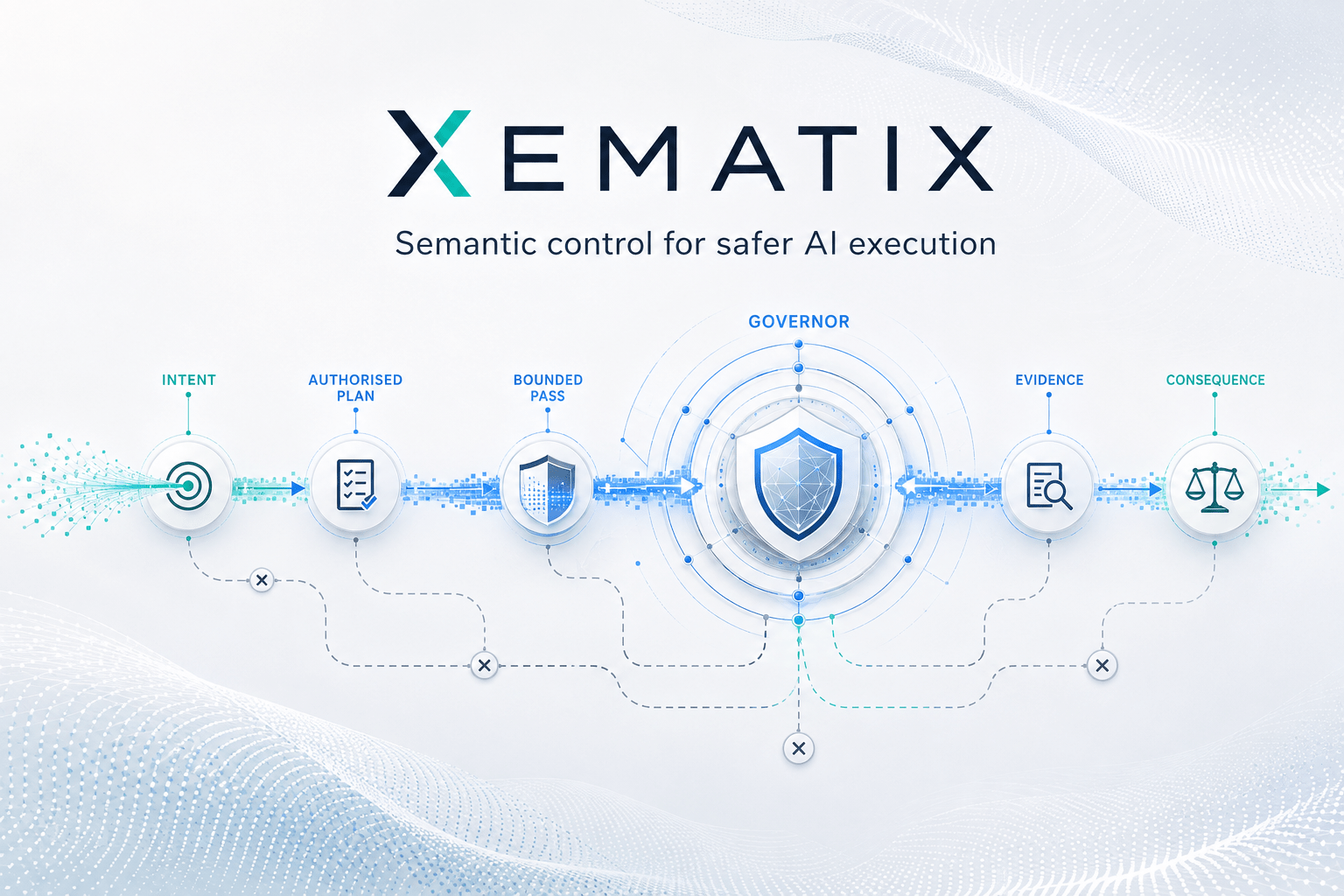
When we talk about AI like it's alive, we hand it trust it hasn't earned. The way out is stubbornly practical: treat AI as an instrument that renders thought into structure so the faint signal survives the noise.
You're right to be concerned. When expectations balloon and perception warps, responsibility evaporates. The solution shifts AI from techno‑magic to method, where you can explain what happened, why it happened, and who's accountable.
Thesis: AI is not the source of intelligence; you are. The system's job is to preserve your intent as structured, traceable output.
Structured AI means using software to render human intent into an engineered, auditable format. The person defines mission, vision, strategy, tactics, and awareness; the system applies those constraints to produce consistent output. This approach serves three groups: leaders who want control over AI outcomes, teams tired of black‑box chaos seeking predictable results, and operators under scrutiny who need to show their work.
Define the terms
Two lines set the ground: intent is human; structure is engineered. That's the difference between control and spectacle.
Structured AI turns human intent into explicit constraints the system enforces. Signal represents the causal pattern you can repeat; noise is everything that looks true but doesn't hold. Structured Cognition renders thought into traceable steps so outputs can be audited and improved. Cognitive trust, confidence that a process will behave as designed, gets earned through transparency, not hype.
Decision making under uncertainty
You don't beat uncertainty with volume; you beat it with clarity. Start small, then raise the stakes once the pattern holds.
Consider a B2B marketer creating a partner pitch. Before structure, three drafts diverge wildly. After structure, the pitch stays aligned across channels because the mission and audience are fixed, and tone rules are explicit. The difference isn't talent, it's method.
Use CAM to align
When the room is loud, you need a single throughline. CAM is the alignment scaffold that keeps the work honest to your intent.
“Structure kills wandering, not creativity. It frees you to explore variants inside useful boundaries.”
The setup takes thirty minutes and follows five steps. Mission states the purpose and boundary in one sentence. Vision describes the future state the work should reinforce. Strategy chooses the cause‑and‑effect drivers you'll emphasize. Tactics define the repeatable moves and constraints around format, voice, and sources. Awareness identifies signals to watch and how you'll adapt.

A product lead setting CAM for a feature pitch might privilege customer proof over novelty in Strategy, then require one customer quote and one risk caveat in Tactics. Every output now traces back to those decisions. Review time drops, and off‑brand claims disappear.
How to separate signal from noise
The fastest way to find the signal is to lower the cost of learning. Think reversible first, definitive later.
Run a two‑week window of reversible experiments. Fix your CAM once, then generate three variations that differ only on one lever, tone, proof type, or call‑to‑action. Hold distribution constant and change one variable at a time. Keep a short narrative log for each run so decisions stay explainable.
A consultancy testing three intros to the same deck, credibility‑led, problem‑led, and outcome‑led, discovers only the problem‑led version drives conversations. Same audience, same offer. The team now has causal evidence, not vibes, and adjusts accordingly.
The Pitch Trace Method
This simple pass ties every pitch line to a piece of intent you can point at. Mark each sentence to a CAM item, remove lines with no parent, then rewrite for flow without breaking the ties. You end with a pitch you can defend.
When a founder's five‑minute pitch drops two flashy claims because they map to nothing in Strategy, investors later repeat her defined customer proof instead of the theatrics. She doesn't sound smaller; she sounds accountable.
Cognitive instrumentation for operators
Tools should act like instruments, not oracles. You set the score; the system plays it consistently and shows the sheet music.
Use an instrumented layer to enforce your constraints at generation time, keep provenance on sources and decisions, and make edits first‑class so you can see cause over noise. I once shipped a deck that landed fine but felt off. We traced it: one tactic rule had drifted, proof came from a blog, not a customer. We corrected the rule, regenerated, and the next meeting converted. The difference was traceability, not talent.
“The machine isn't the intelligence. It's a mirror, a filter, an amplifier, nothing more, and that's enough.”
Strategy vs tactics
Strategy says why a move works; tactics say how you'll do it today. Don't blur them. Keep one abstract concept visible per artifact. If you must add a second, make it an example, not a new idea. Use one decisive threshold: if a tactic can't be traced to Strategy with a single sentence, it doesn't ship.
When a team debates a trendy opener that fails the trace test, they drop it. The opener becomes a customer risk moment instead, supported by one proof, clean, steady, effective.
Common objections
Won't structure kill creativity? Structure kills wandering, not creativity. It frees you to explore variants inside useful boundaries, so unusual ideas land without breaking trust.
Isn't this just better prompting? Prompts are moments; structure is a system. Prompts change the surface. Structure preserves intent across people, time, and channels.
Isn't setup heavy? You trade one 30‑minute pass for weeks of rework. The cost is front‑loaded; the savings recur.
What about learning my brand over time? Don't outsource your identity. Define it. Let the system enforce it. That's how outputs stay explainable and aligned.
The bridge from desire to action
Here's the gap most people face: they want AI that works, but they're stuck with AI that wanders. The friction isn't technical, it's methodological. You need a system that preserves your intent from brief to output. The belief that drives action? Structure beats magic every time. XEMATIX isn't building a mind; it's building that bridge.
Get the short guide: From Magic to Method. You'll receive a 5‑step setup, a 30‑minute CAM worksheet, and a two‑week test plan. One focused email, then one follow‑up with examples. Every step maps human intent to traceable output, the system preserves your fidelity; it doesn't replace it.
On the far side of complexity, the signal is quiet but clean. You get there by making intent explicit, running reversible experiments, and insisting on traceable reasoning. Choose method over magic. Set your structure today.
Here's something you can tackle right now:
Before your next AI task, write one sentence defining your mission and one constraint the output must follow. Generate three versions, then trace each line back to your intent.